A Language of Space: 2026
London Studio
An outline for a proposal
Title: A Language of Space:
This installation will transform the gallery into a charged, immersive environment in which the relationships between the viewer’s body, the architecture and surveillance become interwoven. Drawing on recurring themes in my practice—including queer identity, systems of control, and public and private behaviours—the work creates a responsive ecosystem in which sculptural forms, kinetic movement, light, and sound are controlled by custom-built software that interacts in real time with visitors.
The installation incorporates a new body of work currently under development in the studio. This work centres on responsive illuminated forms that translate human movement into patterns of light and kinetic activity. Building upon my longstanding interest in coincidence, entanglement and collective behaviour, the installation seeks to visualise invisible networks of interaction that emerge when people occupy a shared space. Human presence becomes both catalyst and material, generating shifting relationships between individual actions and collective outcomes.
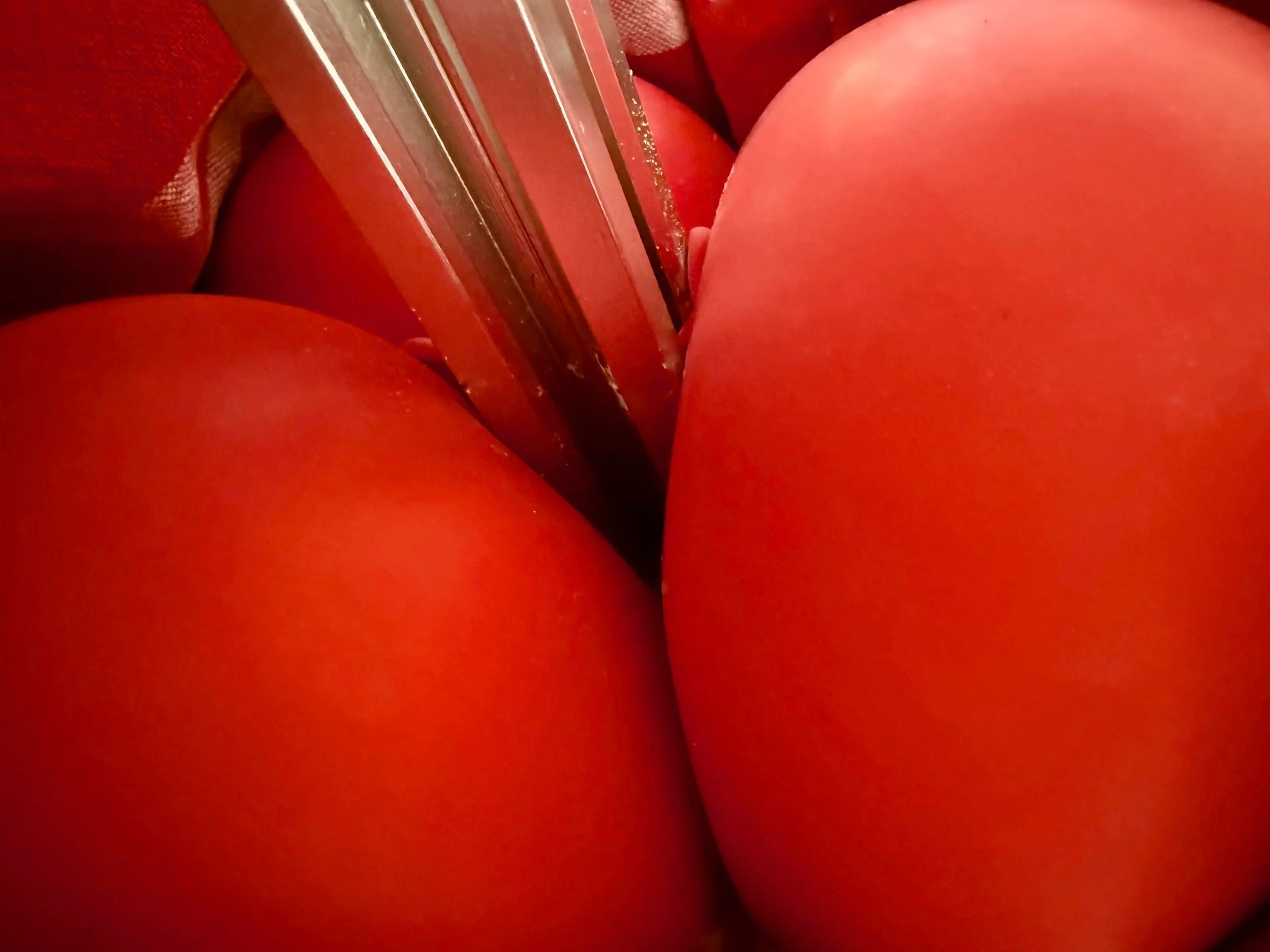
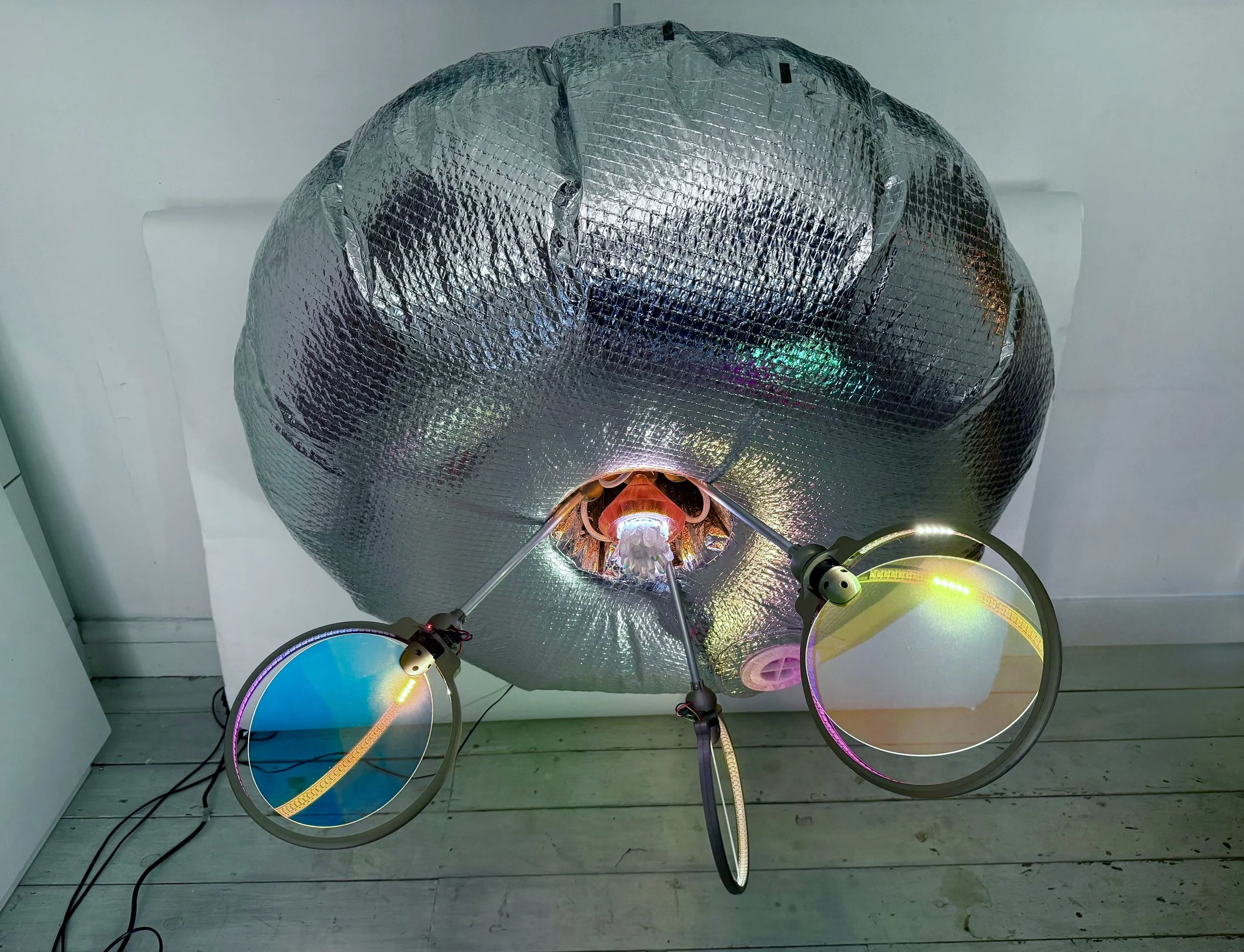
Installed along one wall of the gallery will be a sequence of large, silver, 120cm-diameter doughnut-shaped inflatable forms positioned at approximately torso height (pictured above). Their placement establishes a direct bodily relationship with viewers, activating an awareness of scale, proximity and physical presence. These inflated forms occupy an ambiguous territory between the organic and the industrial. They resemble swollen organs, fleshy protrusions, or a row of public urinals, evoking themes of consumption, vulnerability, sexuality and desire.
Emerging from each inflatable form are three paddle-like appendages mounted with rotating mirrored surfaces and internally illuminated. Powered by inbuilt motors, these reflective elements slowly and independently rotate, scattering fragments of light throughout the space.
Exposed cables trail from the sculptures, appearing to penetrate or impregnate their surfaces, creating a visual tension between the technological and the corporeal. The mirror paddles simultaneously suggest organic forms extending into the gallery space, probing both the architecture and the viewer, pollinating the environment into a site of seduction, confrontation and observation.
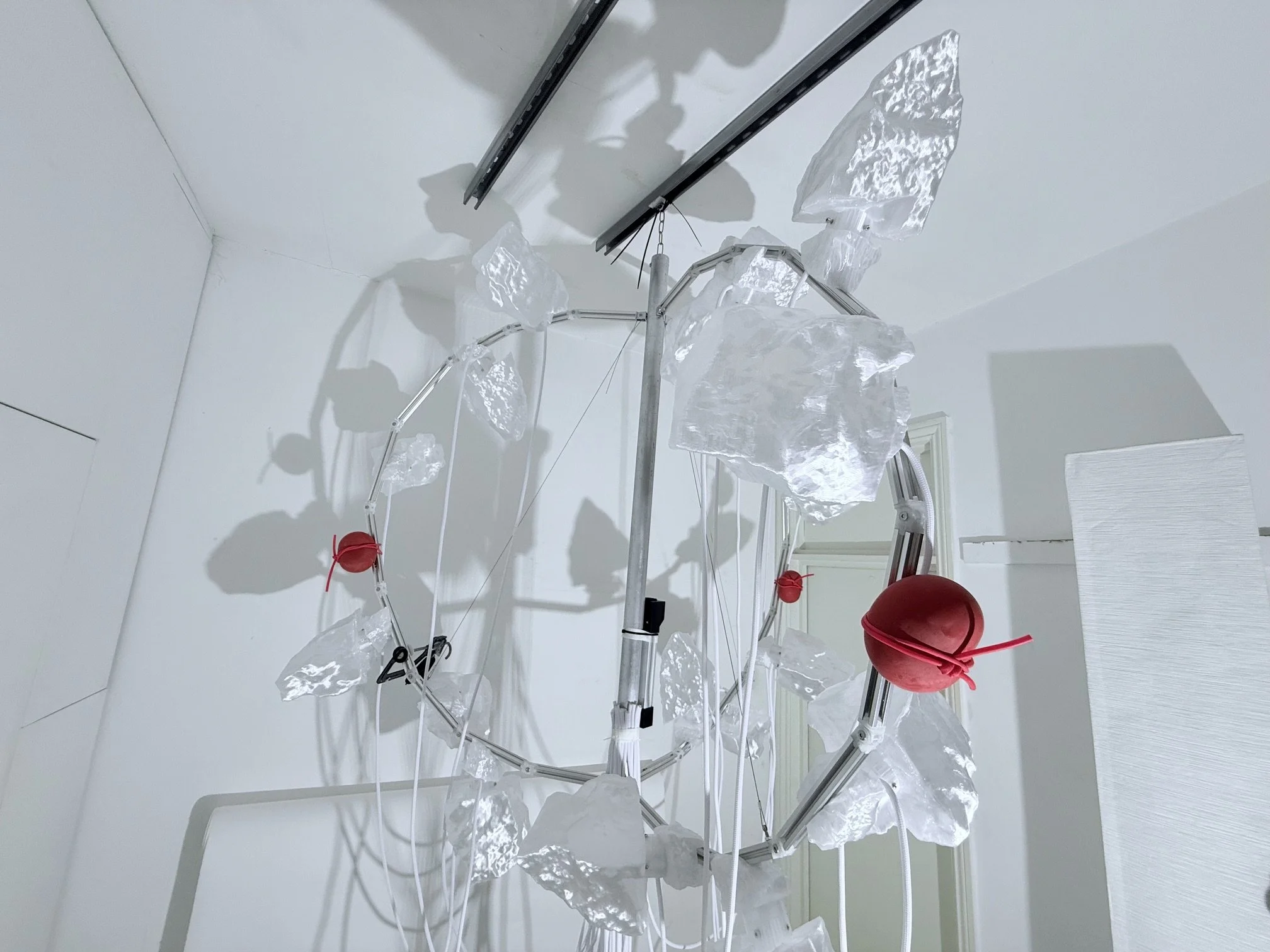
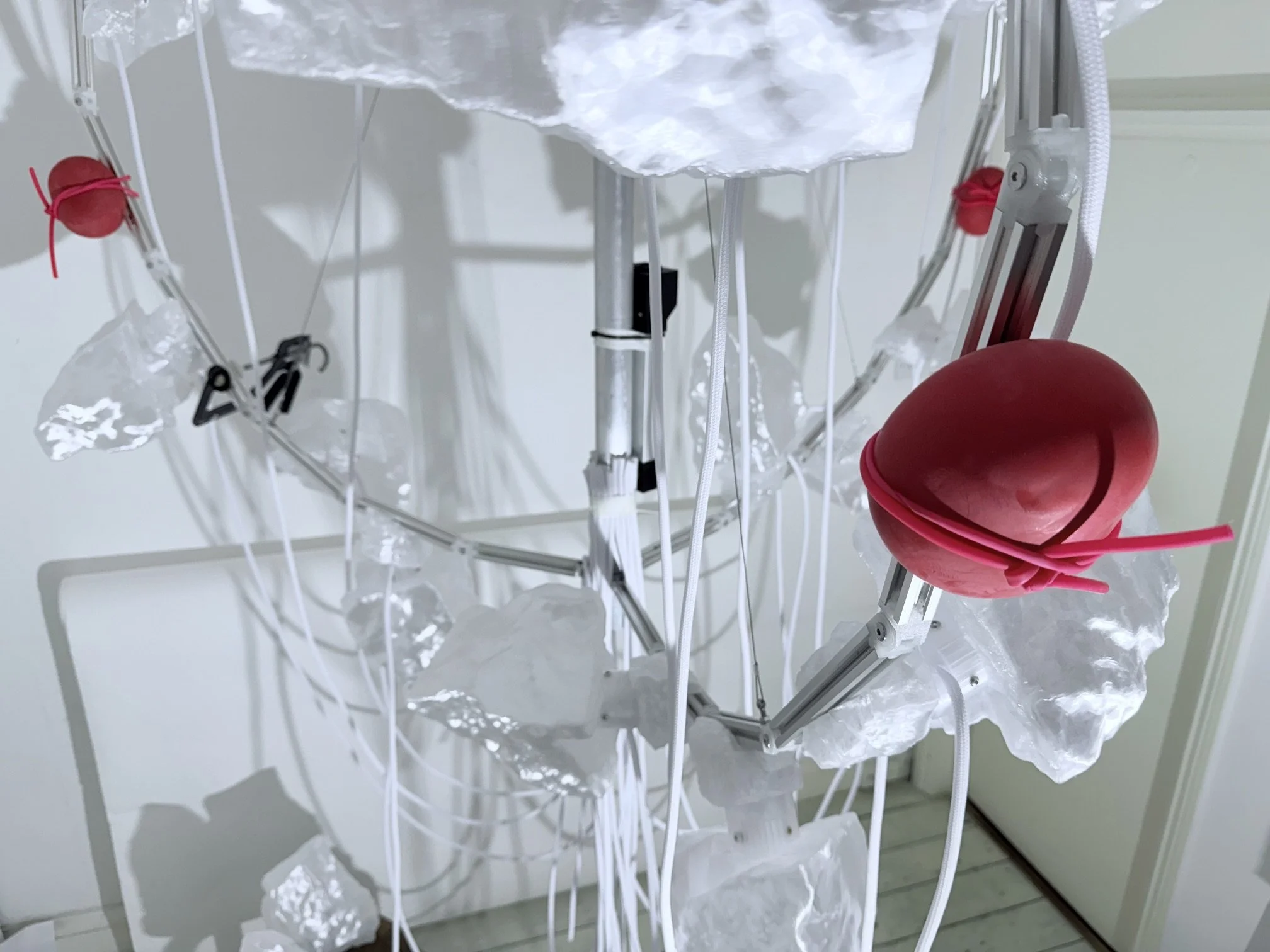
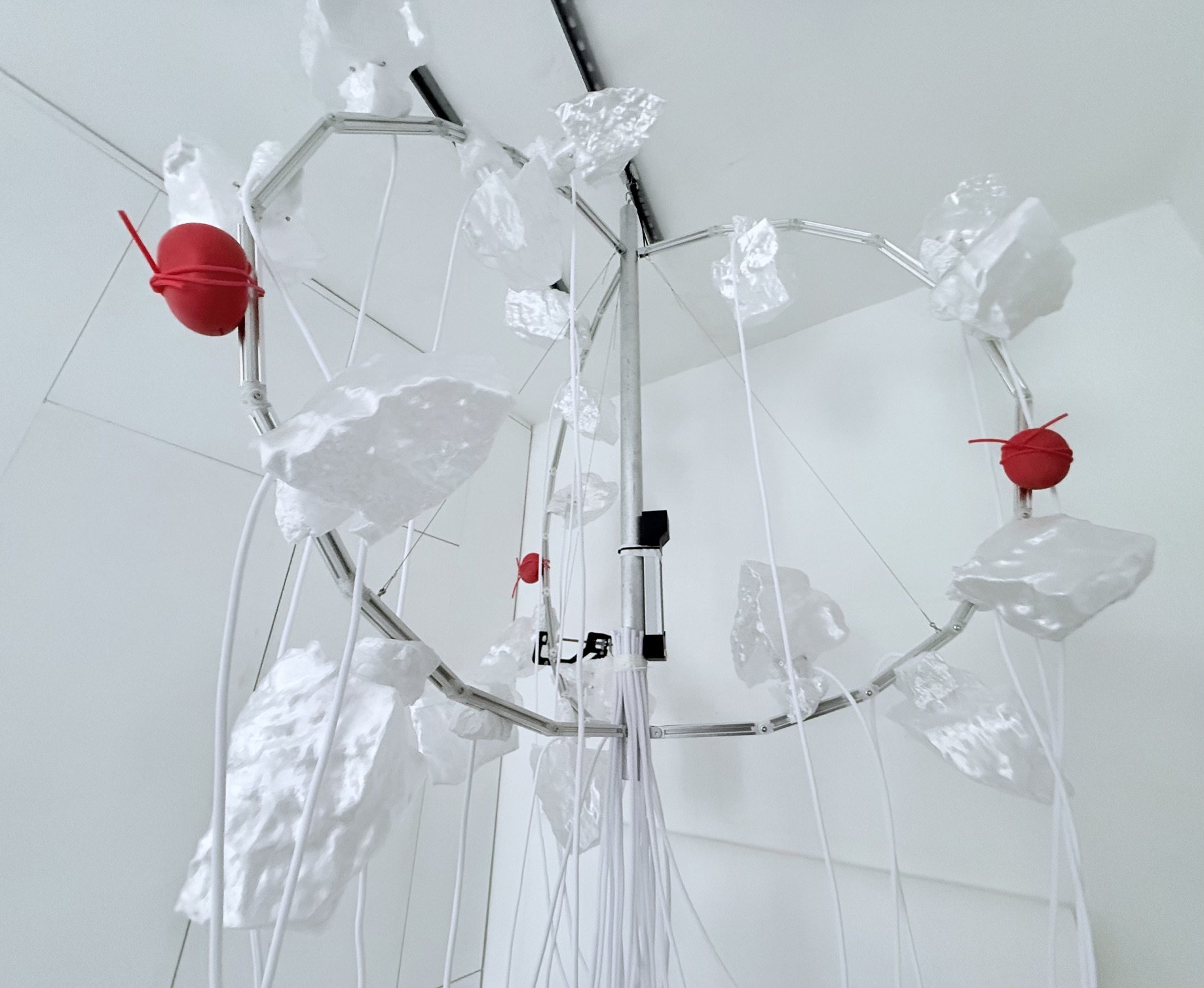
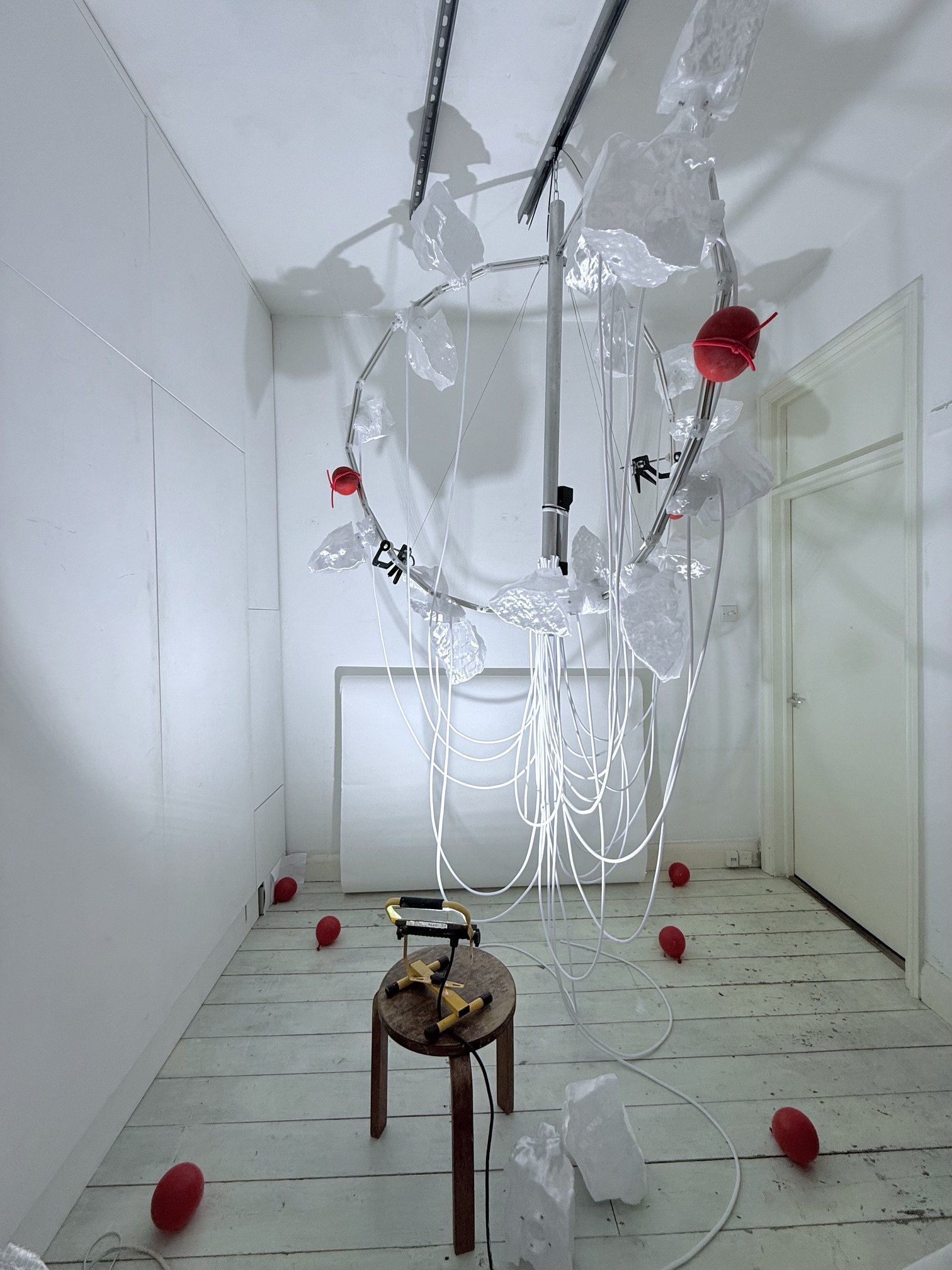
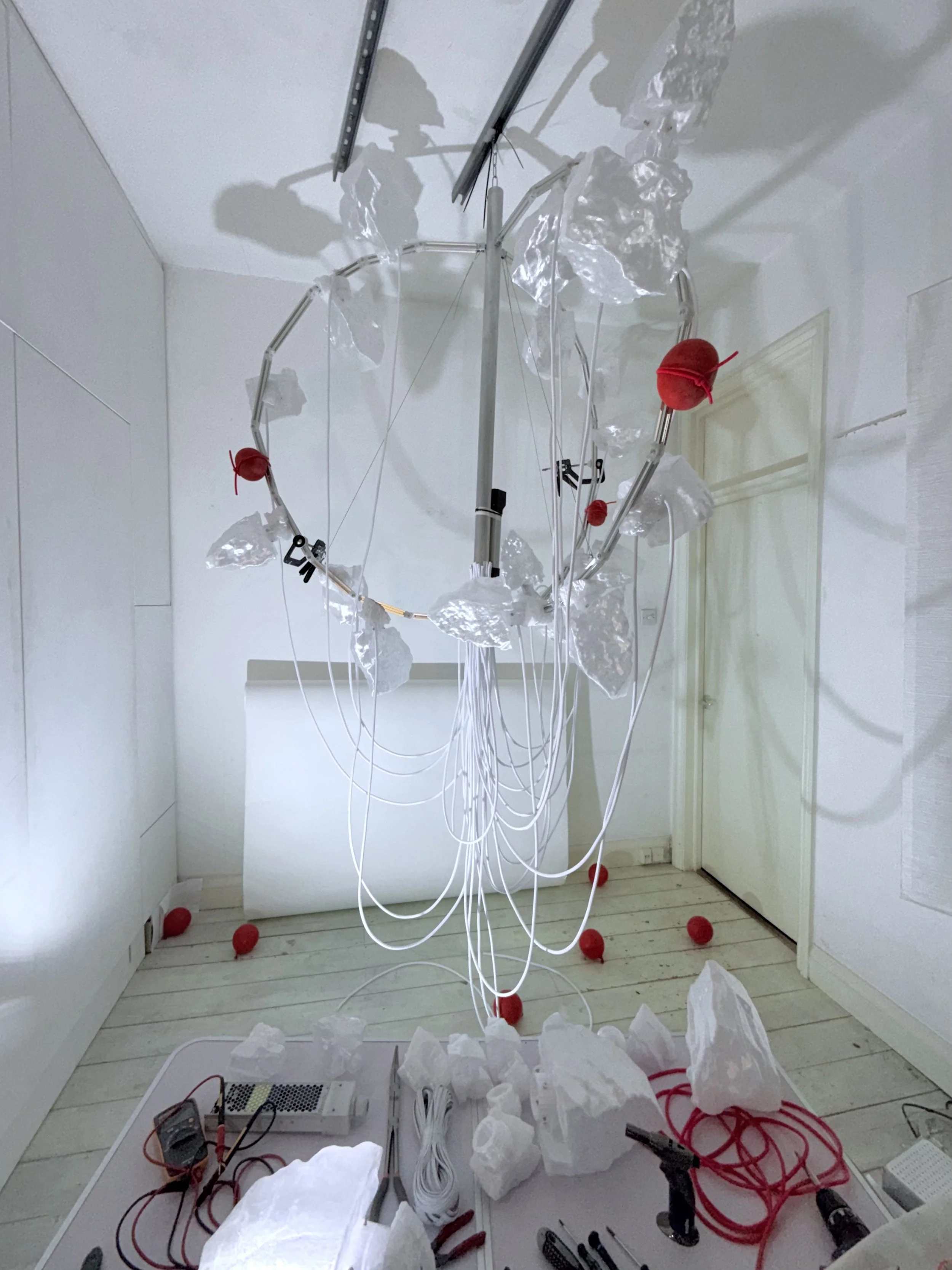
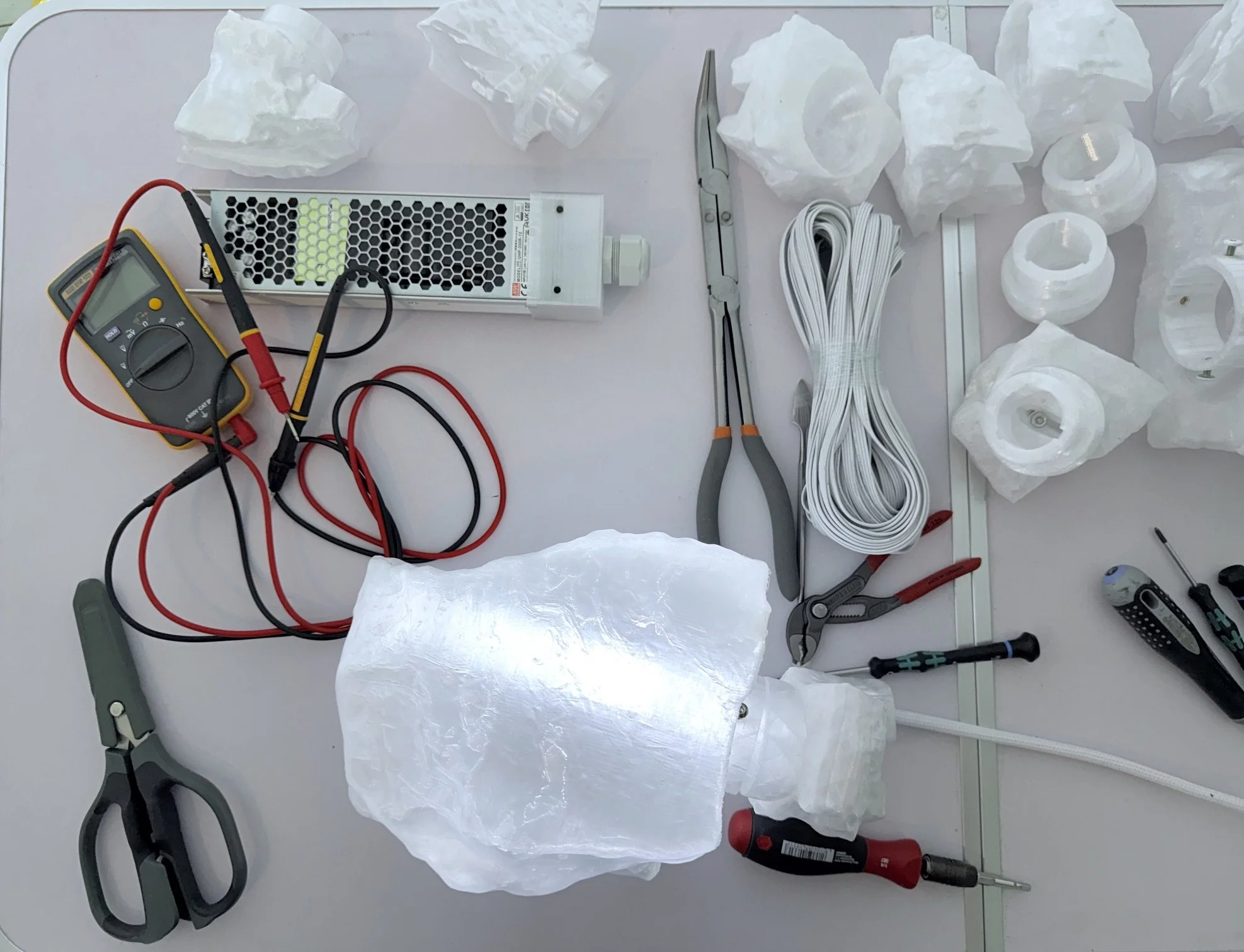
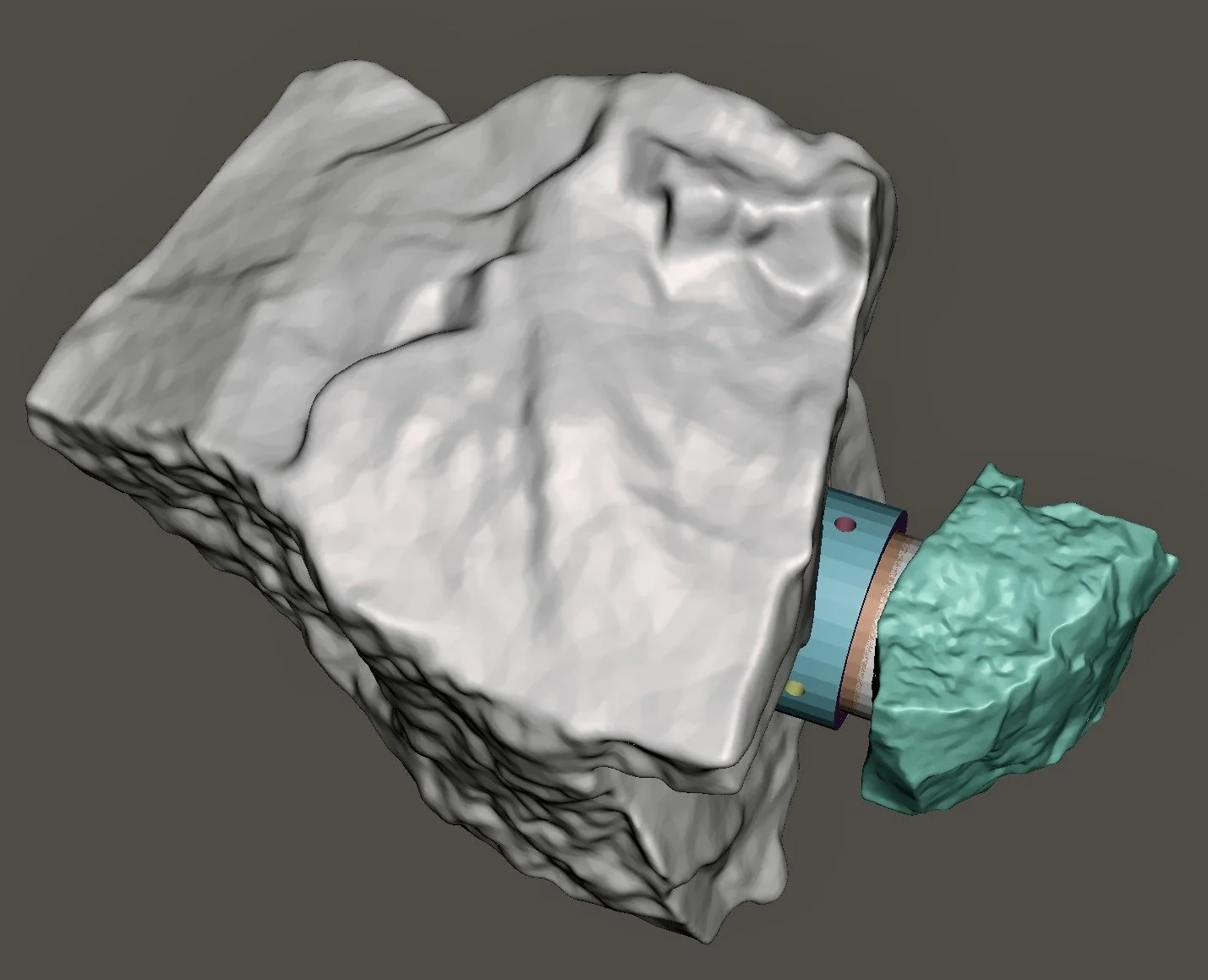
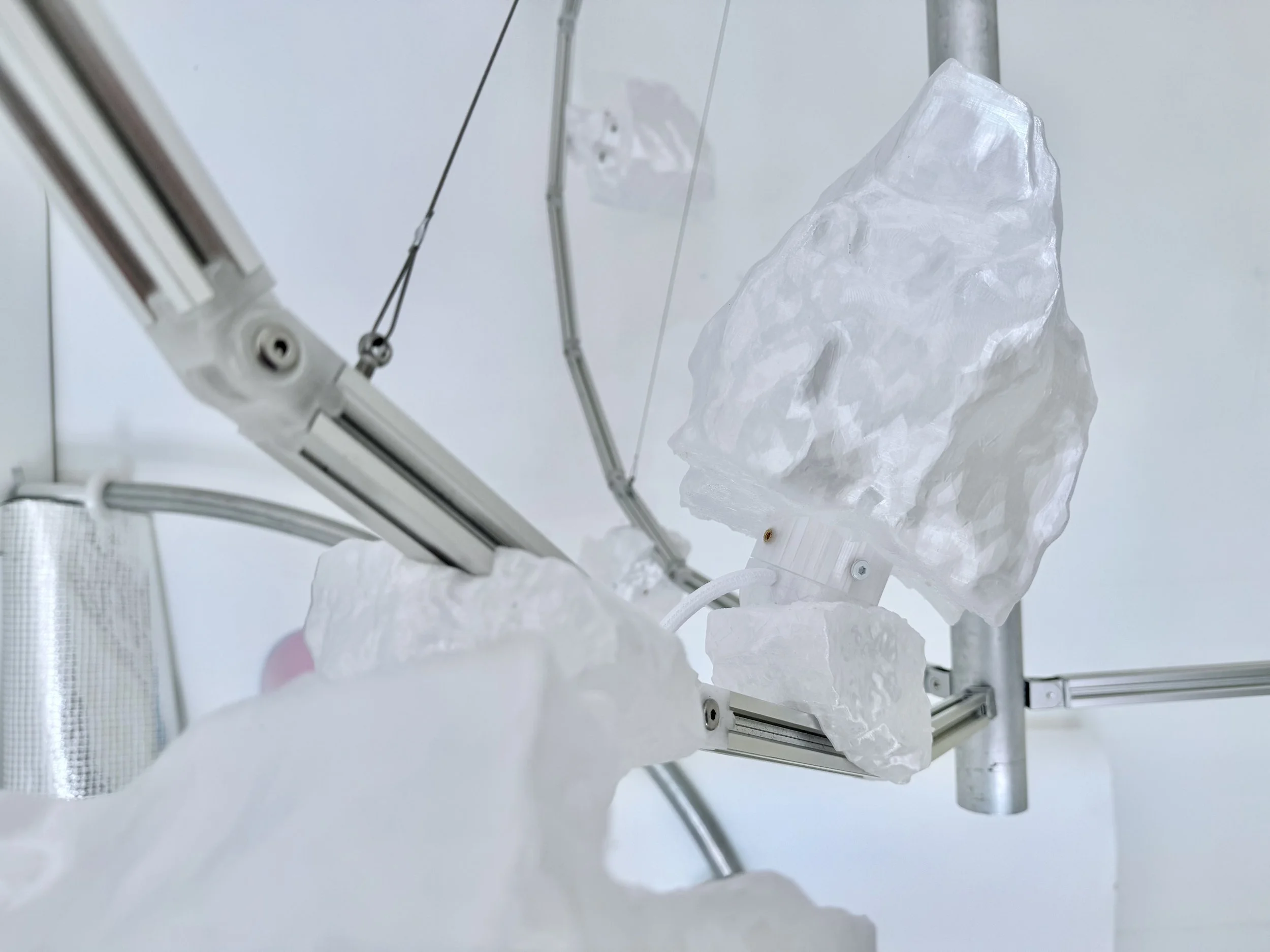
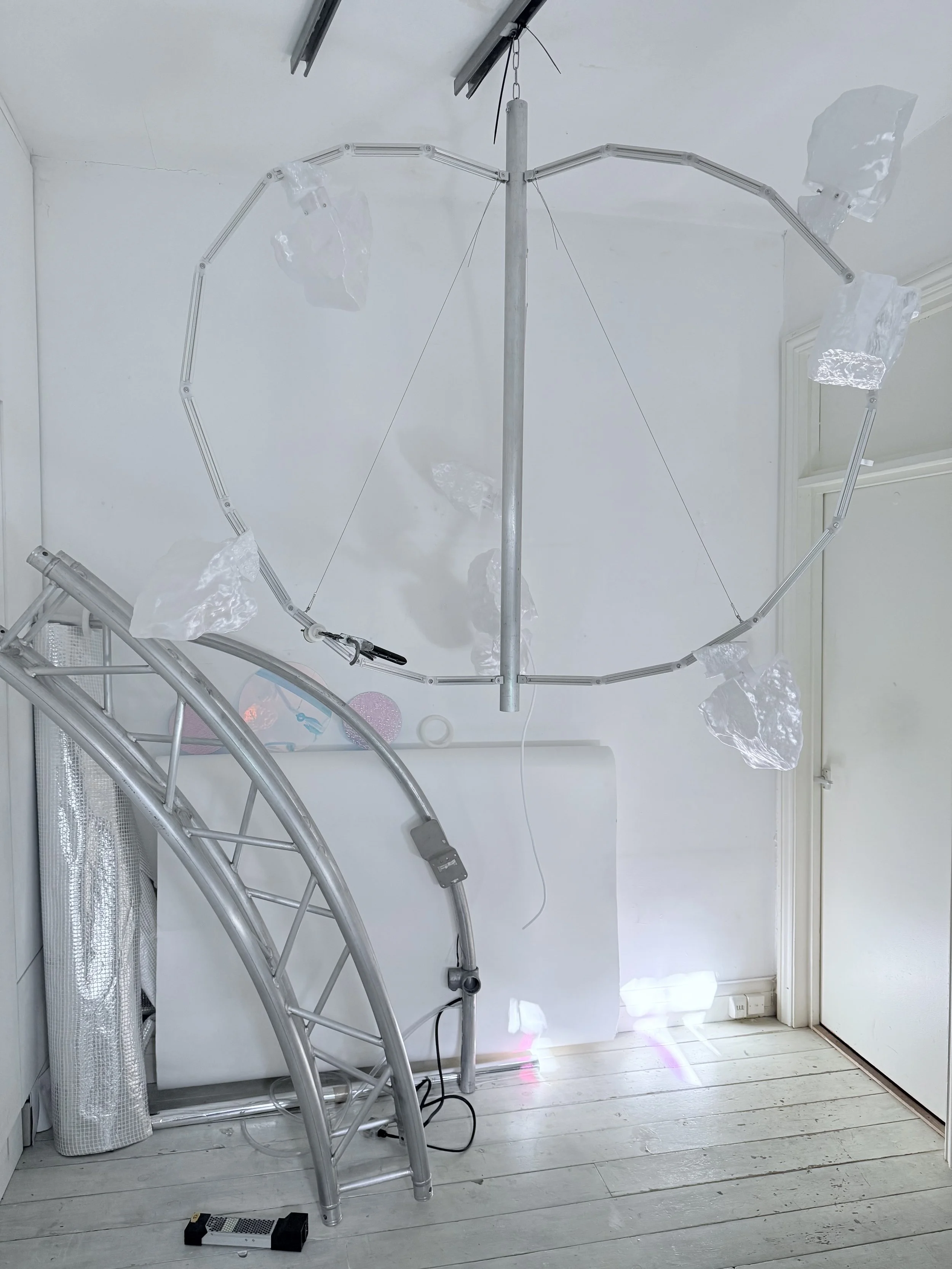
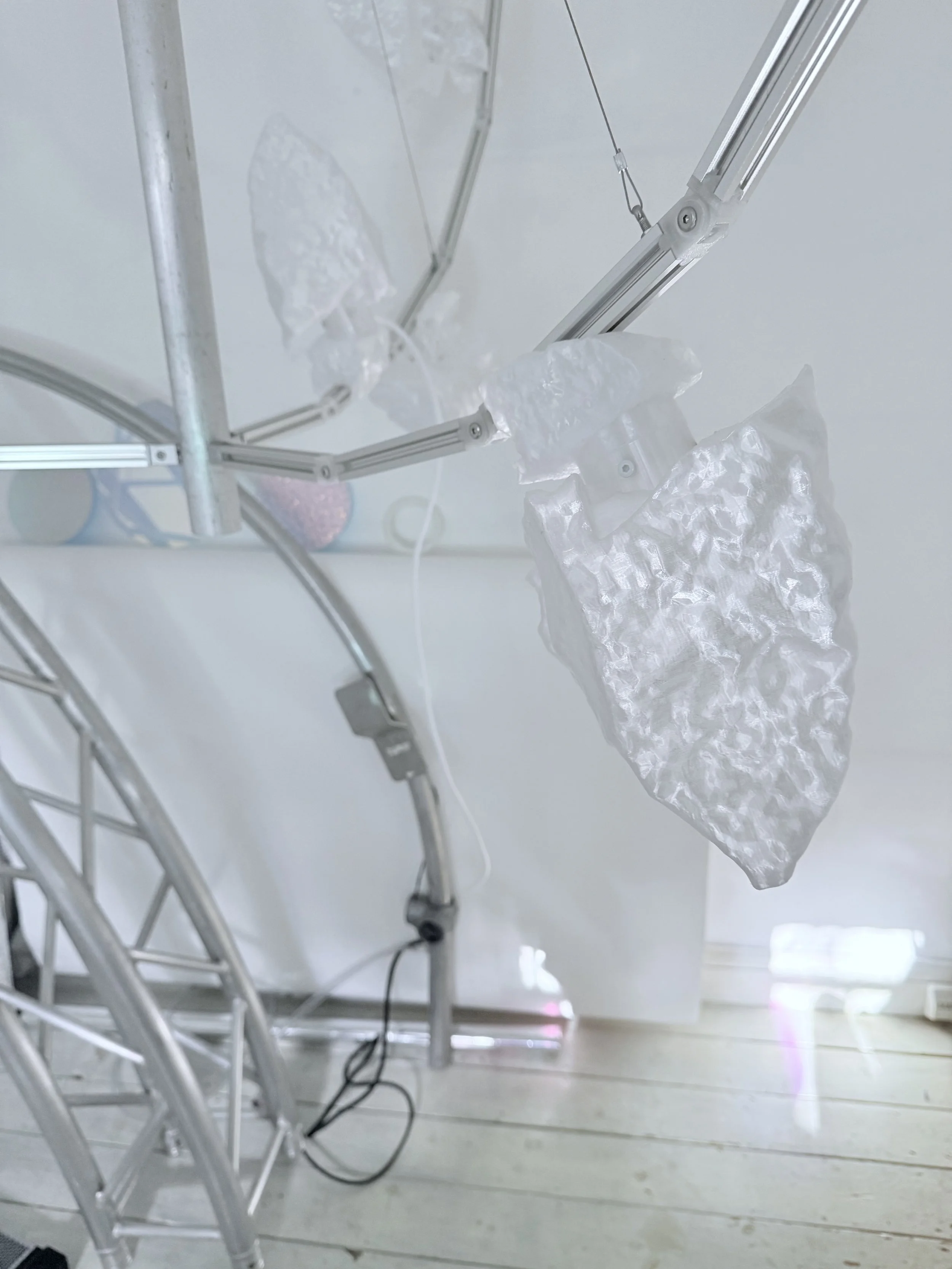
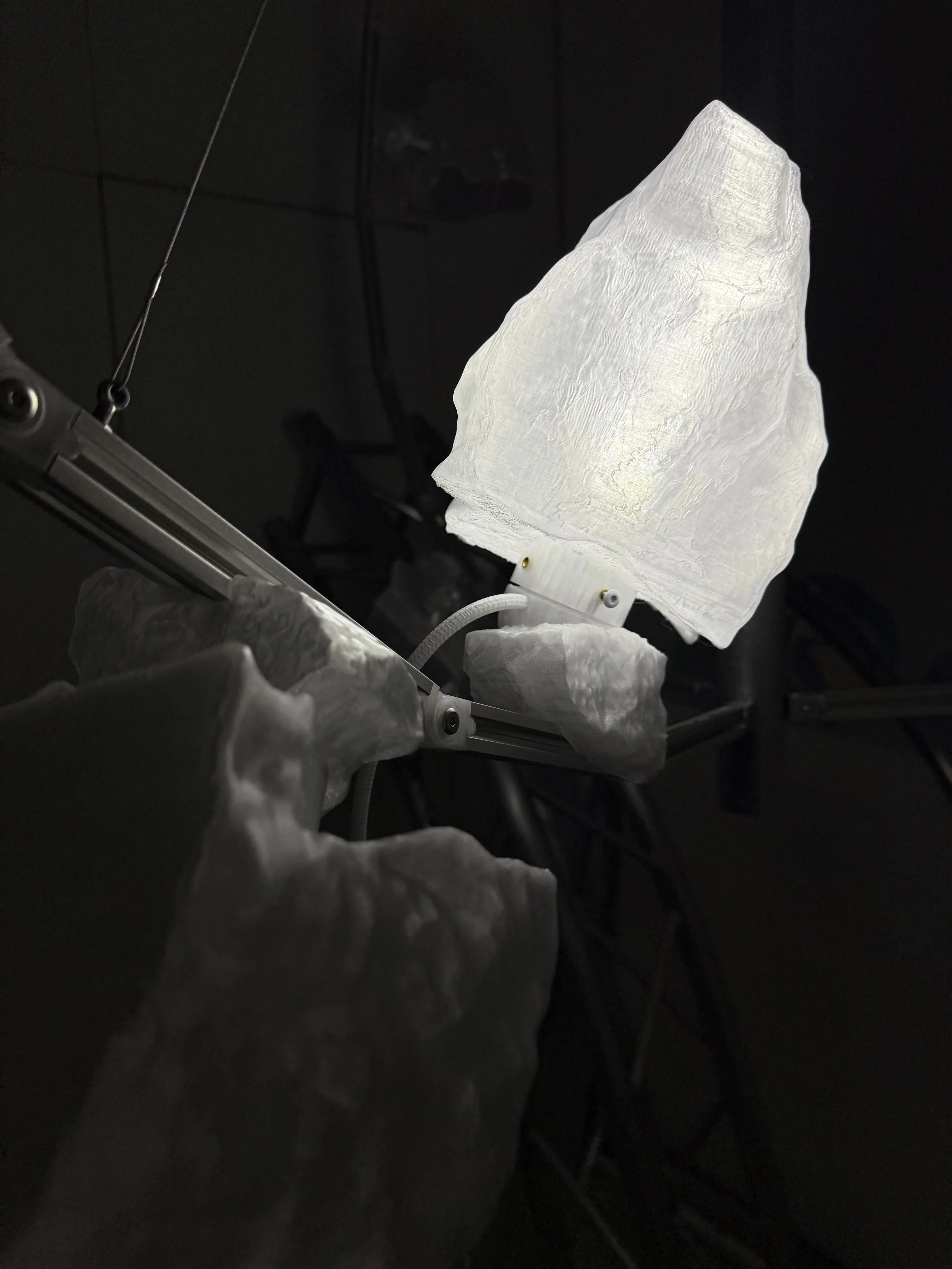
A large circular structure hanging from the ceiling will function as a sensory organ within the larger interconnected system (partly built in the studio seen here). Produced through a combination of 3D scanning, digital modelling and additive manufacturing, these white opaque 3D-printed forms are derived from scanned rock formations and geological fragments. Internally illuminated by elongated pulses of multi-LED lights, they appear as hybrid entities suspended between natural and artificial states. Within these systems is a series of cast, scanned and 3D-printed red interlocking semi-circular inflatable cast structures. Embedded within these forms are 60GHz sensors capable of detecting movement, proximity and subtle bodily activity such as one’s heartbeat within the surrounding environment. Data collected by these sensors is processed through the custom-built software that orchestrates complex lighting behaviours across the artwork.
At a micro level, interactions between individual components generate increasingly complex responses across the wider system. Light pulses, reflections and subtle movements travel through the network of sculptural elements, creating a distributed intelligence that appears to possess its own evolving behaviour. No two experiences of the work are identical; instead, the installation continuously adapts to the presence and movement of its audience.
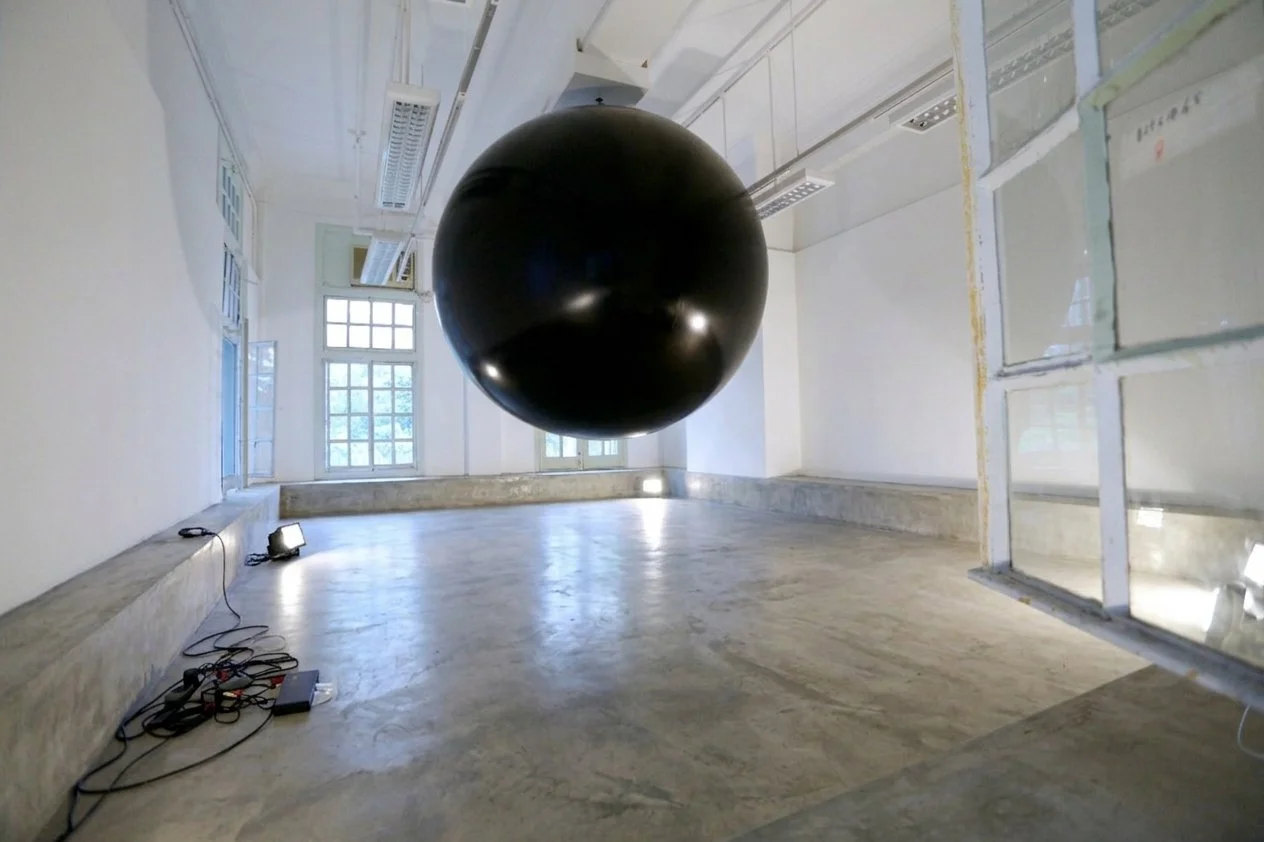
Suspended above the gallery, an archival artwork, a black 2.5-meter diameter inflatable rubberised orb travels slowly across the space by a customised pulley motor on a high wire. Moving mechanically back and forth, this black inflated sphere (all-seeing) in constant rotation will be positioned on a high wire above the space, moving across the room while constantly rotating. This and others within the space evoke hidden forms of communication, signalling systems, listening devices, viral transmission, or secret languages operating beneath public visibility. Listening devices positioned throughout the installation further amplify sensations of surveillance and hidden observation, suggesting overheard conversations, concealed histories, or unseen witnesses.
Through the combination of inflatables, responsive technologies, kinetic movement, sound, reflective surfaces, and tactile materials, this installation creates an environment where intimacy and control, desire and anxiety, memory and fantasy become deeply intertwined. Revisiting concerns first explored in earlier works such as The Policing of Pleasure, 1997 and Killing Time, 2002, this new project examines the dangerous pleasures of existing between public and private worlds, exposing the fragile boundaries that separate visibility from concealment, connection from isolation and the human body from the systems that seek to regulate it.
Work produced with support from electronic engineer/software designer Erik Kearney.