Liquid Mountain/The National Opera House, Wexford, Ireland, 2009
Liquid Mountain/ National Opera House, Wexford, Ireland. Commissioned by the Office of Public Works, 2009
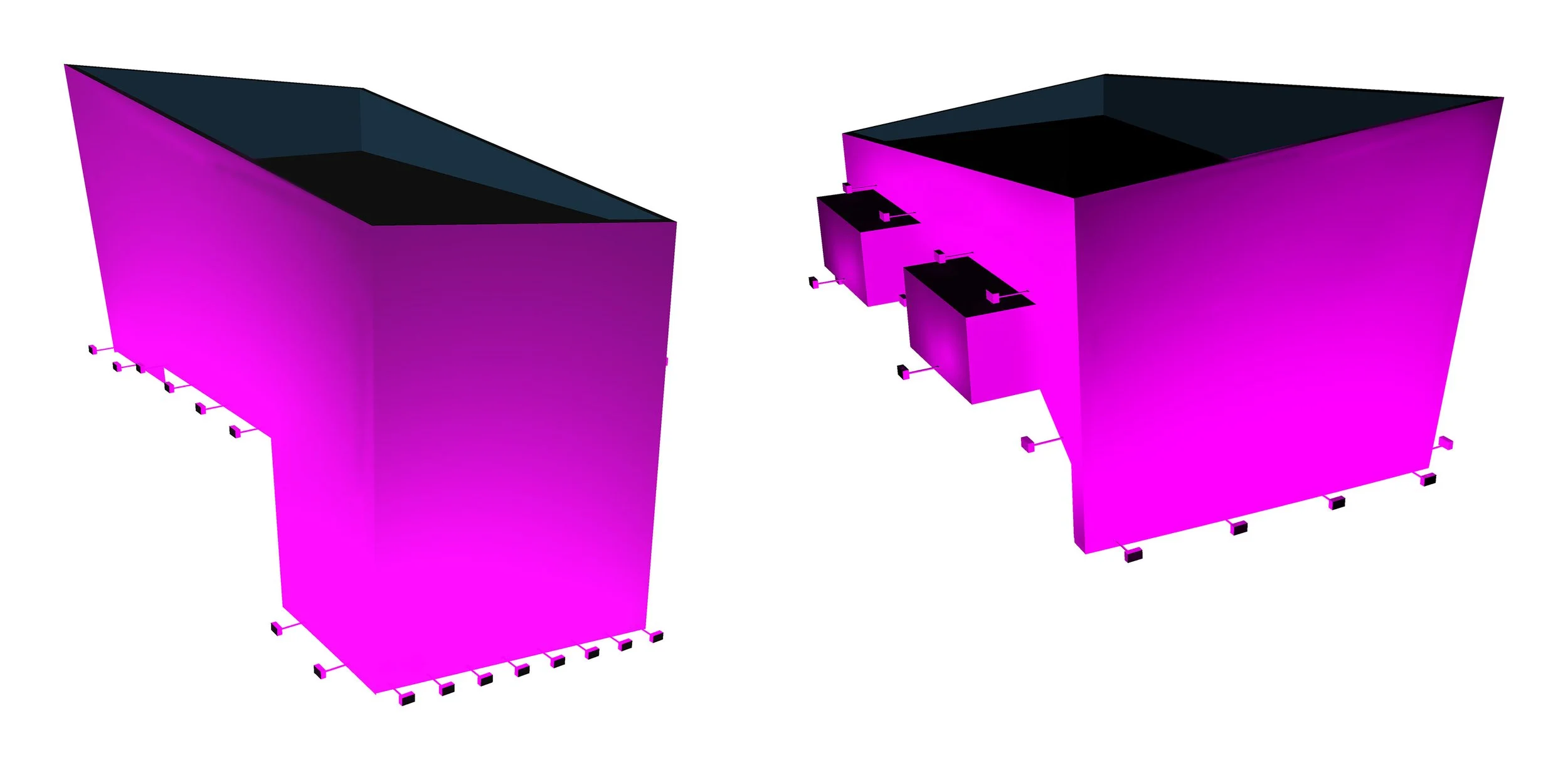
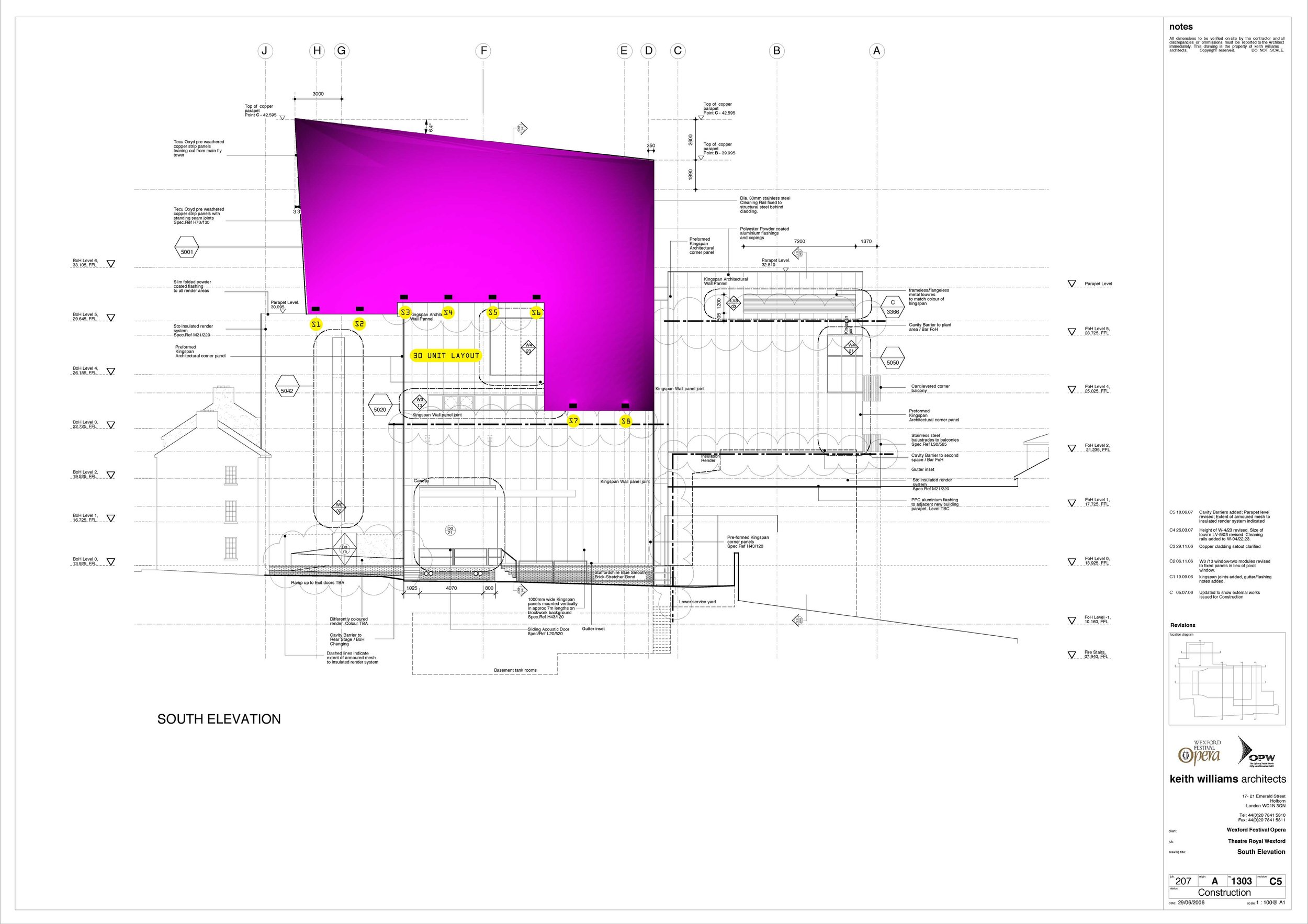
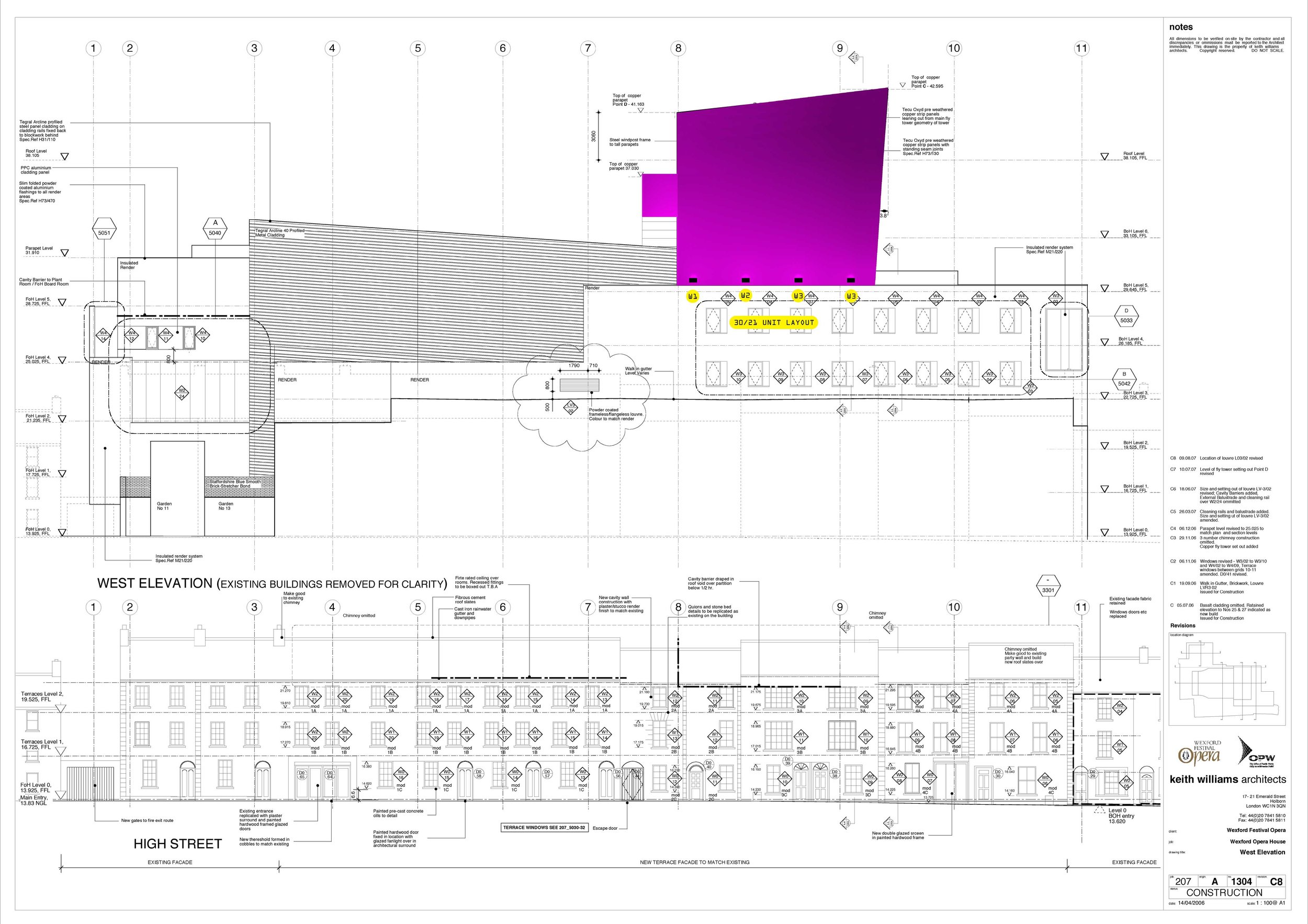
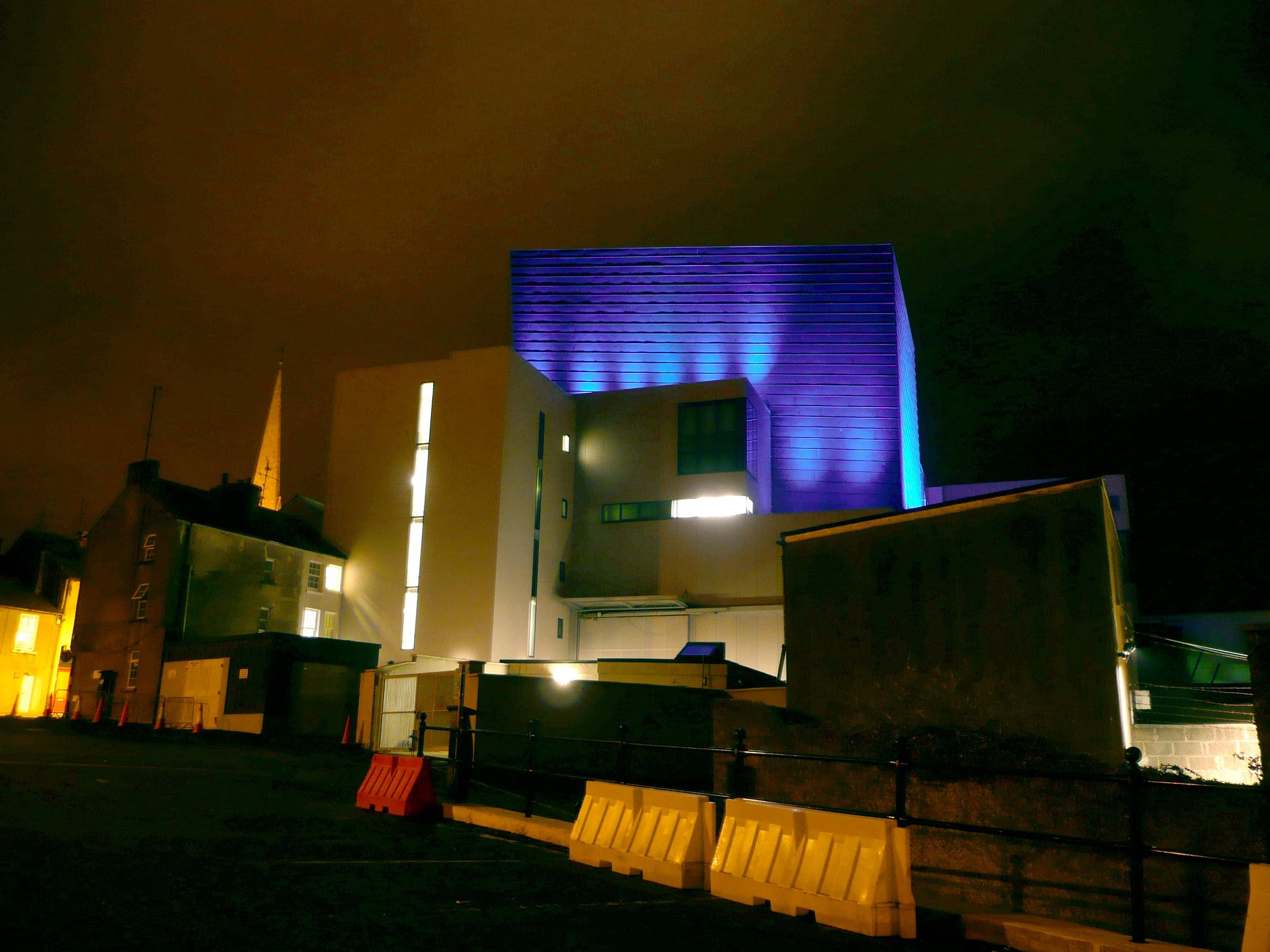
Liquid Mountain was conceived to make the architecture of the National Opera House visible beyond the theatre’s confines. The fly tower—an immense vertical volume normally understood primarily as a functional part of the stage machinery—became the surface and instrument of a continuously changing work of light. I was interested in transforming this architectural presence into something less fixed: a structure that could register and respond to the conditions of the town and its surrounding landscape.
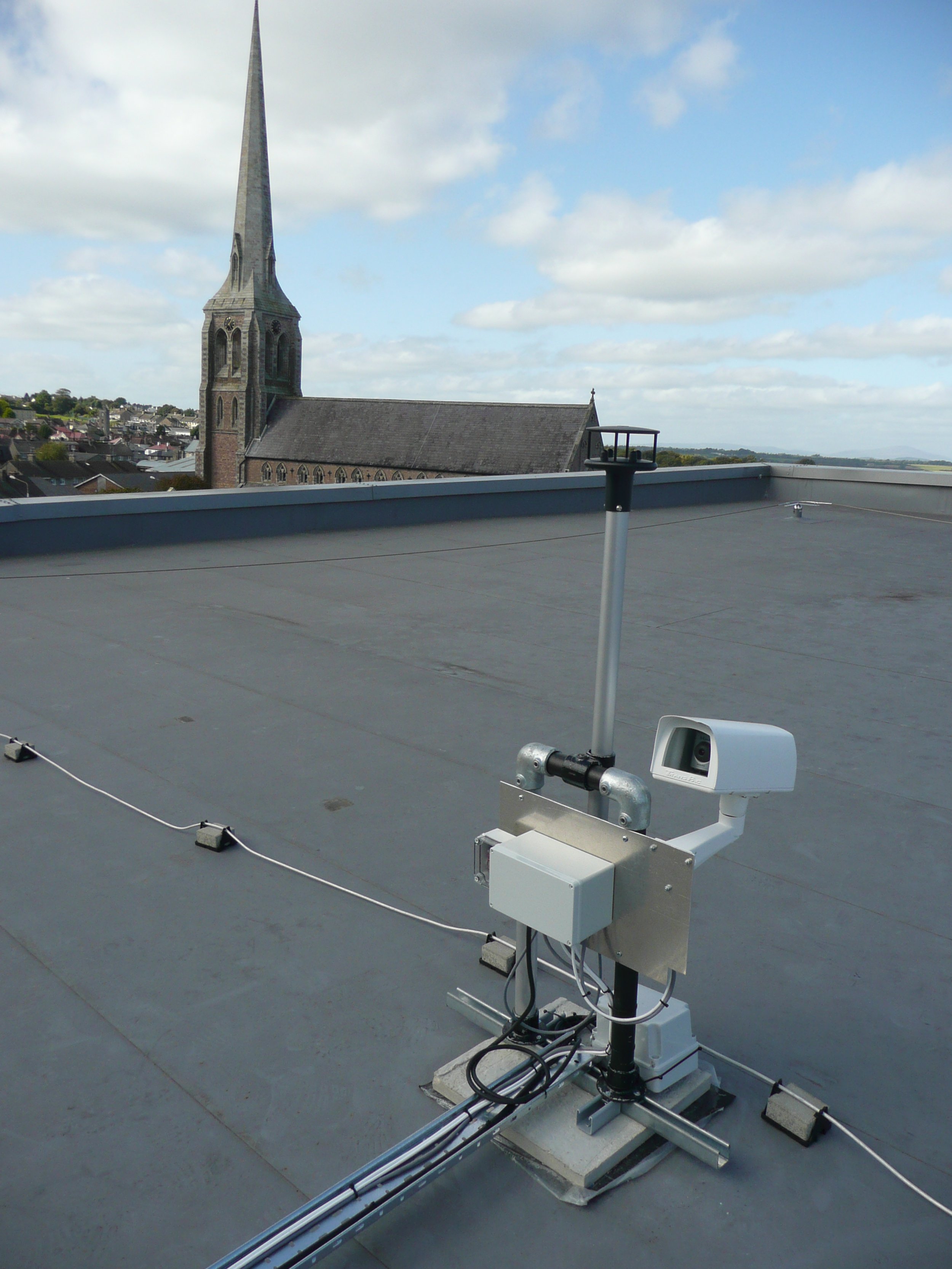
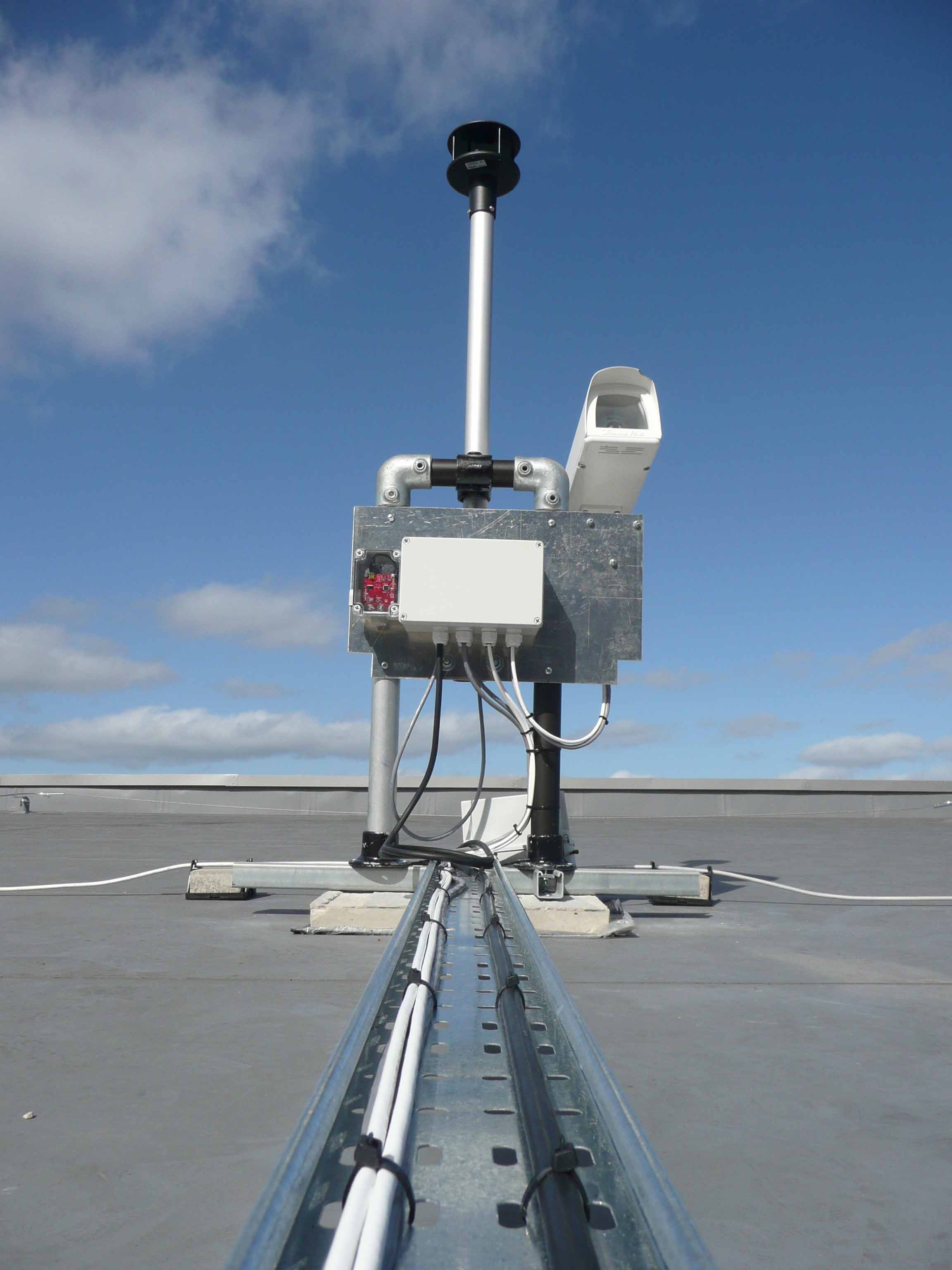
The project involved the dynamic illumination of all four elevations of the fly tower. Rather than treating the building as a conventional screen onto which a predetermined image or sequence was projected, I wanted the light to behave as a living, responsive system. Recording the live ongoing feed of wind movements around the building and translating it into data, which a computer system then processed to generate an evolving an ever-changing coloured light score. The resulting illumination was therefore never entirely predetermined, as each moment of the work emerged from an encounter between atmospheric conditions, technology, and the architecture.
The wind became, in effect, an invisible performer. Something that could not normally be seen was given a temporary visual presence through the building. Small changes in air movement could produce corresponding changes in colour, intensity and rhythm, allowing the architecture to appear to breathe, pulse or shift. The building became both receiver and transmitter: an enormous instrument capable of making perceptible something that ordinarily exists outside our visual field.
I was particularly interested in the tension between the tower’s massive, apparently immovable presence and the instability of the forces acting upon it. The solidity of the architecture was countered by light, colour and atmospheric movement. The Opera House tower could appear to dissolve, become translucent or lose some of its physical weight. At certain moments, the illuminated surface suggested that we were looking through the building itself rather than at it, creating an imagined glimpse of activity within—of theatre, movement, performance and the life of the town.
This relationship between the exterior and interior was central to the work. An Opera House theatre is fundamentally a place of transformation: ordinary materials, bodies, voices, light and movement are converted into something temporarily other. Liquid Mountain extended this process beyond the auditorium and into the public realm. The architecture itself became a kind of stage, while the town became its audience. Instead of a performance contained within the building, the building performed for the city.
The work also emerged from my interest in how architecture accumulates meaning through its relationship with its surroundings. Wexford is an ancient town with a complex history, and the Opera House occupies a particular position within that history as a contemporary cultural institution. I wanted Liquid Mountain to acknowledge both conditions—the historical depth of the place and its continuing capacity for change. The work therefore sits somewhere between landscape, architecture and technology, allowing these different temporalities to overlap.
From different locations around Wexford, the tower becomes a shifting point of orientation. Its visibility changes with distance, weather, darkness and the viewer's position in the town. For residents, it becomes part of the familiar night-time landscape; for visitors, it operates as a marker, drawing attention towards the Opera House and the centre of Wexford. It is both landmark and event: a physical structure whose identity is continually altered by the invisible environmental forces surrounding it.
I called the work Liquid Mountain because I wanted to bring together two apparently contradictory conditions. A mountain suggests mass, permanence and geological time; liquid suggests movement, transformation and instability. The title describes the impossible physical proposition at the centre of the work: an enormous architectural mass behaving as though it were fluid.
Ultimately, Liquid Mountain was a dream to create a dialogue between nature, culture and technology without allowing any one of these elements to dominate. Wind—an ancient and uncontrollable force—enters into a relationship with contemporary systems of sensing, computation and light, while the architecture of the Opera House provides the physical and cultural framework through which that relationship becomes visible. The work turns an invisible environmental phenomenon into a collective public experience.
In this sense, the illuminated tower becomes more than a beacon in the centre of Wexford. It becomes a kind of artificial weather system, a responsive presence within the town: an architecture that listens to its environment and in return, speaks back through light. Liquid Mountain is a fusion of landscape, performance, architecture and technology—a new, changing heart within an ancient place.
Computer programmer and software designer Erik Kearney